You have 0 items in your cart


Use Cases
Processes, such as mass spectrometry or sputter deposition, use inert gases to minimize contaminants in highly sensitive measurement readings and applications. Argon often needs 5N (99.999%) purity or higher when used as a sputtering gas in PVD applications.
Purification of Argon
An inert gas purifier can be used to purify inert gases for laboratory use, ensuring that issues such as outgassing during storage are prevented.
The GP100 works off of standard cylinder gas for a compact and lightweight system, compatible with argon, helium, xenon, and neon.
The Evaporator
1. Innovative ternary alloy films pave the way for ultra-low-power memory devices
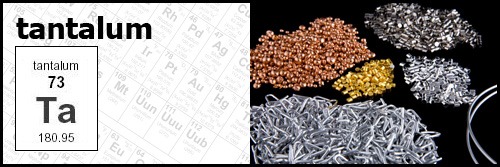
2. Technical Tip – Deposition of Tantalum Thin Films
3. Self-driving lab learns to grow materials on its own
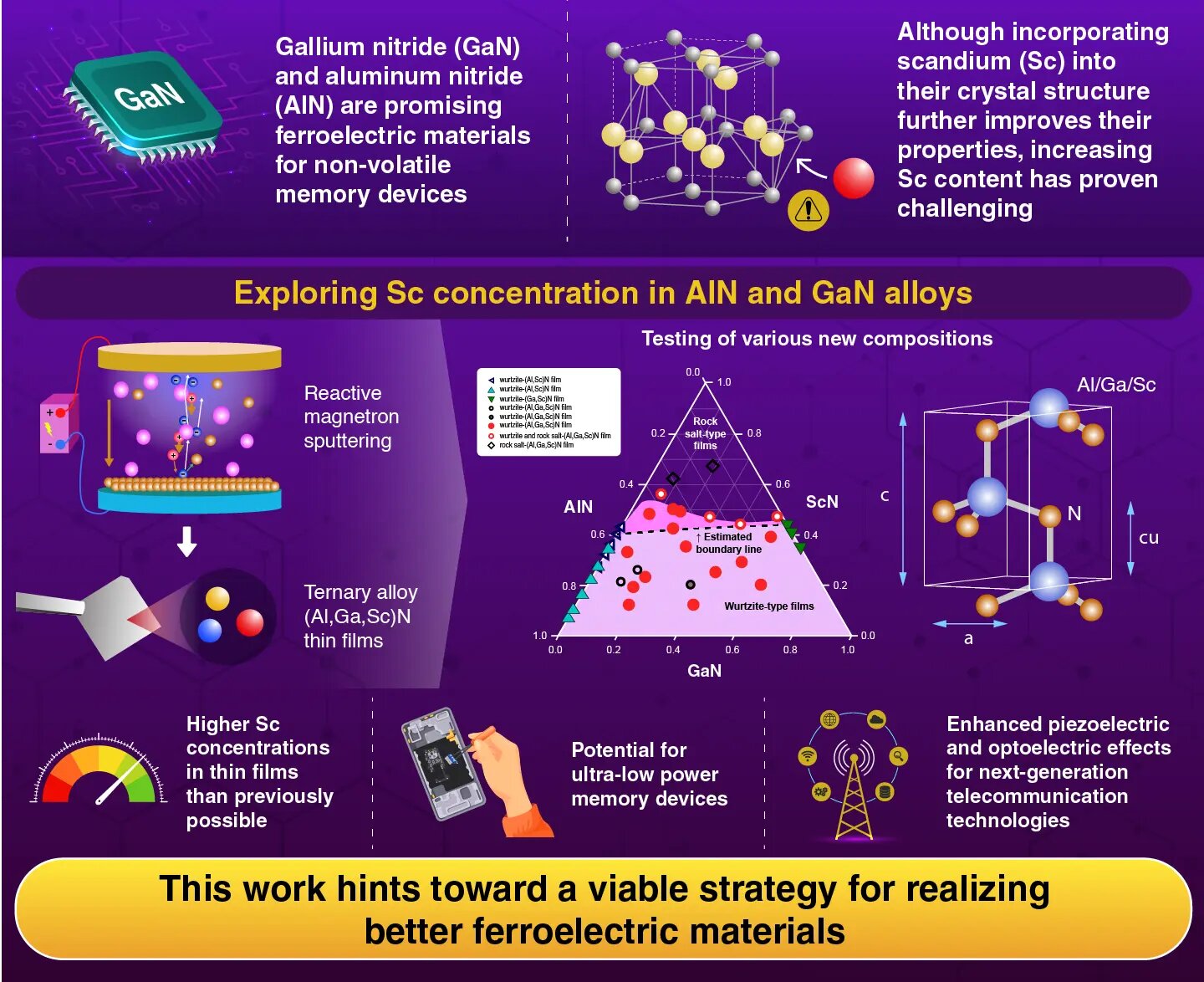
(Image: APL Materials, 2025)
| Institute of Science Tokyo |
A recent study reports (Al,Ga,Sc)N thin films with record-high scandium levels, with exciting potential for ultra-low-power memory devices, as reported by researchers from Institute of Science Tokyo (Science Tokyo). Using reactive magnetron sputtering, they fine-tuned the composition of ternary alloys to overcome previous stability limits.
Beyond enabling efficient data storage, these films also show promise for noise filters for 6G communications and optical computing, thanks to attractive piezoelectric and optoelectric properties.
Tantalum is a refractory metal that is often used for its high temperature and corrosion resistance, and also for its dense structure. Thin films of tantalum can be used, for example, to form barriers to prevent copper from diffusing into silicon. However, these thin films can be difficult to deposit, depending on the method and process.
Sputtering targets coming with purities such as 3N5 (99.95% pure) are used to deposit tantalum and other high temperature materials. These can be customized in thickness and size to match process needs and for optimal deposition set-ups.
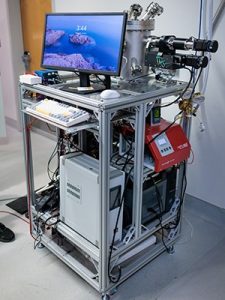
(Image: John Zich)
| Sarah C.P. Williams, University of Chicago |
Now, researchers at the University of Chicago Pritzker School of Molecular Engineering (UChicago PME) have built a “self-driving” lab system that does this work on its own, using robotics and artificial intelligence to decide the next best step without waiting for a human.
“We wanted to free researchers from the tedious, repetitive labor of setting up and tweaking these experiments,” said first author Yuanlong Bill Zheng, who led the work as an undergraduate and is now a UChicago PME PhD student.
Pittsburgh, PA | Nov 8-13, 2026
David L. Lawrence Convention Center
We appreciate your honest feedback and would like to see what our readers have to say about our company, service, and products. Thank you for reading The Evaporator.
Let us know how we can improve our customer experience through social media or email.

The right evaporation source can make your thin film coating process a success. Since 1963, we have been fabricating and recommending evaporation sources for our customers in various cutting-edge industries.